
Ingredients
Quantities for 4 portions
Check ingredients as you prepare them. Changing portions resets the checks.
Method
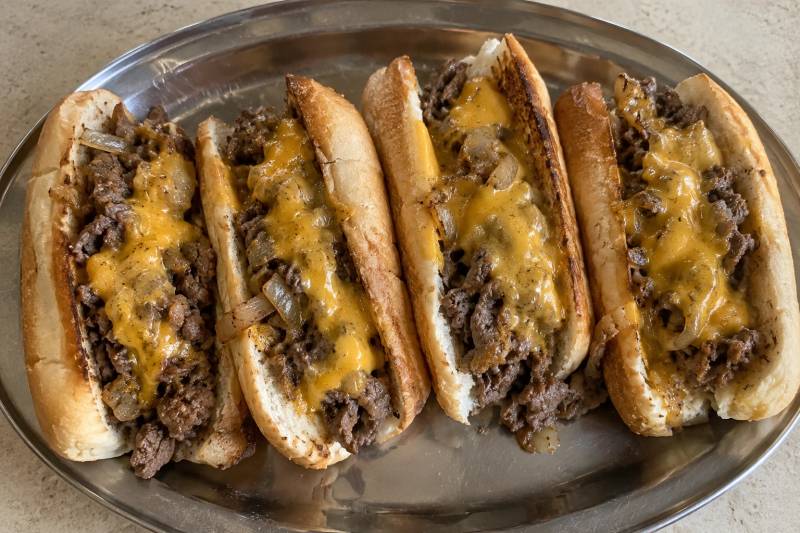
- Ask the butcher to slice the steak about 2 mm thick, across the grain. Cut the slices into shorter strips and season with the salt and pepper. Thinly slice the onion. Grate the cheddar and divide it into two equal 100 g portions.
- Heat 10 ml vegetable oil in a large frying pan. Cook the onion over medium heat for 8 to 10 minutes until golden. Transfer to a bowl.
- Heat the remaining 10 ml oil over high heat. Cook the beef in two batches for 2 to 3 minutes each, turning and separating the strips. Return the onion and all the meat to the pan. Cook until the beef reaches 63 °C, then rest off the heat for 3 minutes.
- Over low heat, fold 100 g cheddar into the meat until melted. Divide the filling into eight small piles, scatter the remaining 100 g cheddar over them and cover for 1 minute to melt.
- Split and toast the eight bread rolls. Fill each with one pile of meat and cheese. Serve two rolls per person.
Shopping tip
Buying the steak thinly sliced avoids a separate chilling step. This version uses small bread rolls.
Where it fits in your week
Suits a calmer day, or cooking ahead at the weekend.
Based on the cook time and portions the recipe states.
Put this recipe into a whole week
PlanMyMeals builds the week around your household's portions and turns it into a shopping list.
No card needed to try it.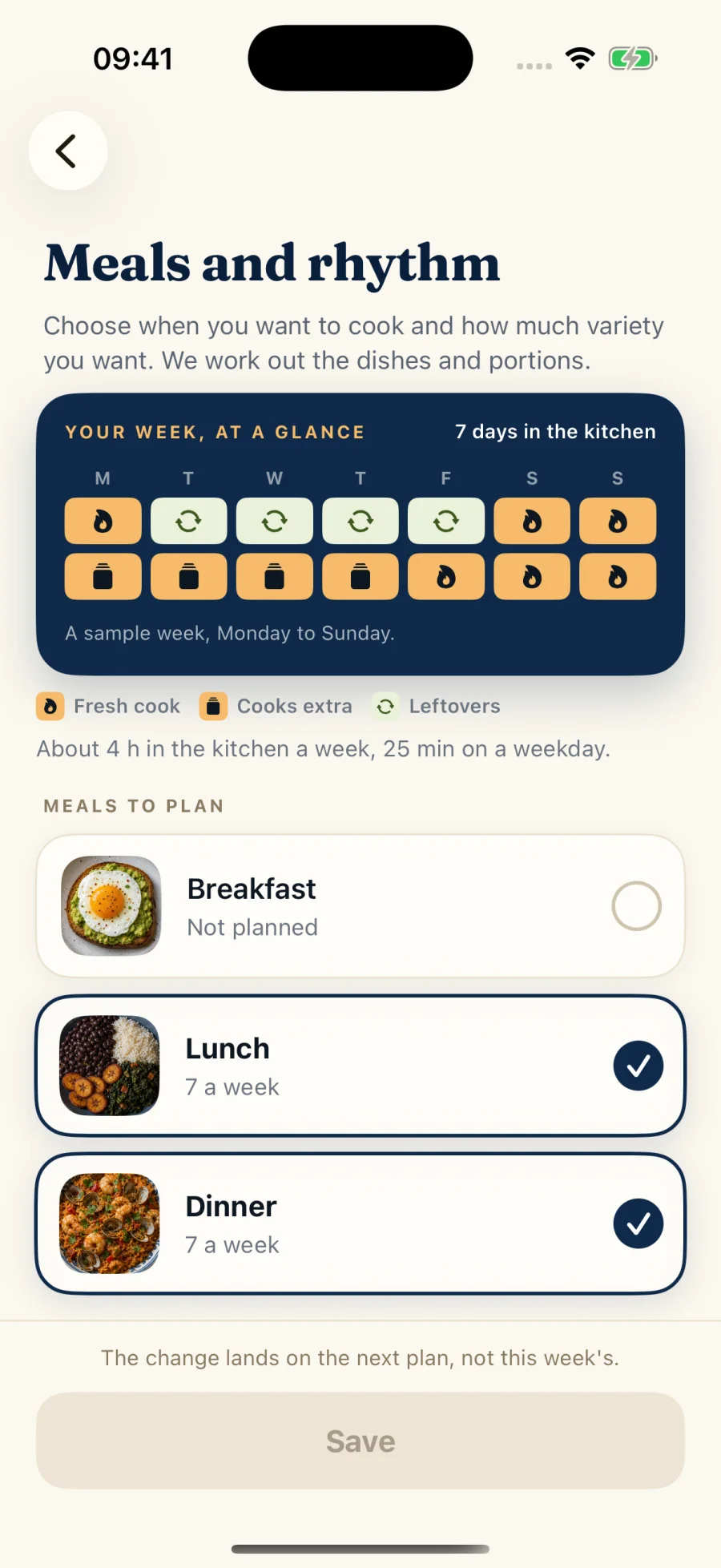
Similar recipes
About this page
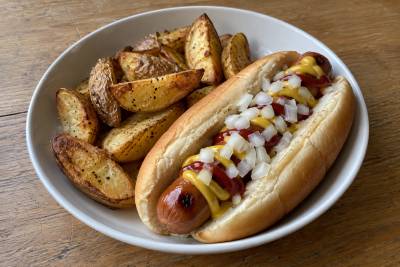
The photograph is AI-generated and illustrates the dish. It is not a record of a cook we carried out.
Times, portions and protein per portion are the recipe author's estimates, not laboratory measurements.