

Air-fryer salmon with mustard and honey
Recipe by PlanMyMealsUpdated
- min
- 25
- portions
- 4
- protein/portion
- 41 g
Ingredients
Quantities for 4 portions
Check ingredients as you prepare them. Changing portions resets the checks.
Method
- Preheat the air fryer to 200 °C. Bring 600 ml of water with 1 teaspoon of salt to the boil; add the long-grain rice, stir once, cover and simmer for 13 minutes. Turn off the heat and let it rest covered for 3 minutes. Also put 1 litre of water on to boil in a second pot, for the broccoli.
- Mix the mustard, honey, the juice of half the lemon, the olive oil and the pepper. Pat the salmon fillets dry with kitchen paper, season with ½ teaspoon of salt and brush the tops with the mixture.
- Place the fillets in the basket in a single layer, skin side down, and cook at 200 °C for 10 to 12 minutes, until the flesh flakes and the centre is pale pink.
- While the salmon cooks, cut the broccoli into florets and boil for 4 minutes in that pot of boiling water with ½ teaspoon of salt; drain.
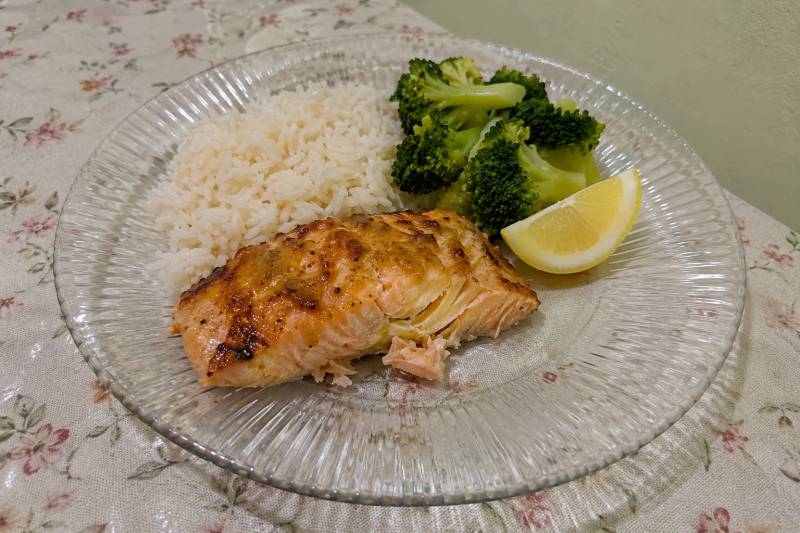
- Serve the salmon with the rice, the broccoli and the remaining half lemon in wedges.
Shopping tip
The mustard and honey form a coating that keeps the salmon from drying out; a thicker fillet needs the longer time.
Where it fits in your week
Quick enough for a weeknight.
Based on the cook time and portions the recipe states.
Put this recipe into a whole week
PlanMyMeals builds the week around your household's portions and turns it into a shopping list.
No card needed to try it.
Similar recipes
About this page
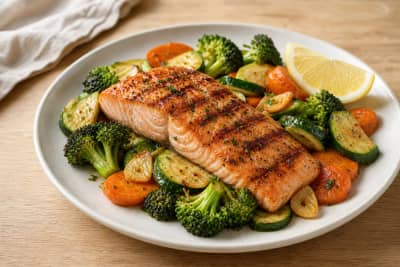
The photograph is AI-generated and illustrates the dish. It is not a record of a cook we carried out.
Times, portions and protein per portion are the recipe author's estimates, not laboratory measurements.